Author: H-J Colston

  • Students at global Model UN blown away by standard of debate

    144 students took part in a global 6th form model UN online conference on Friday 28 January 2022 to debate climate change and raise their voice about the resolutions made by governments in Glasgow at COP26. Covering various time zones, almost half the students were from China, with others joining from the UK, Australia and Ireland. The conference was organised by Engage with China, an educational charity that aims to build China literacy in UK schools.

    “The standard of debate was really high,” said Theo Innes, aged 15 from The Grange school, Cheshire who acted as President of the conference.

    I was particularly blown away by delegate China 4 (himself Chinese) who so eloquently and persuasively spoke about how the fossil fuel resolution to phase out coal would impoverish six million uneducated people in mainland China. It really highlighted the complexities and challenges for governments to reduce carbon emissions.”
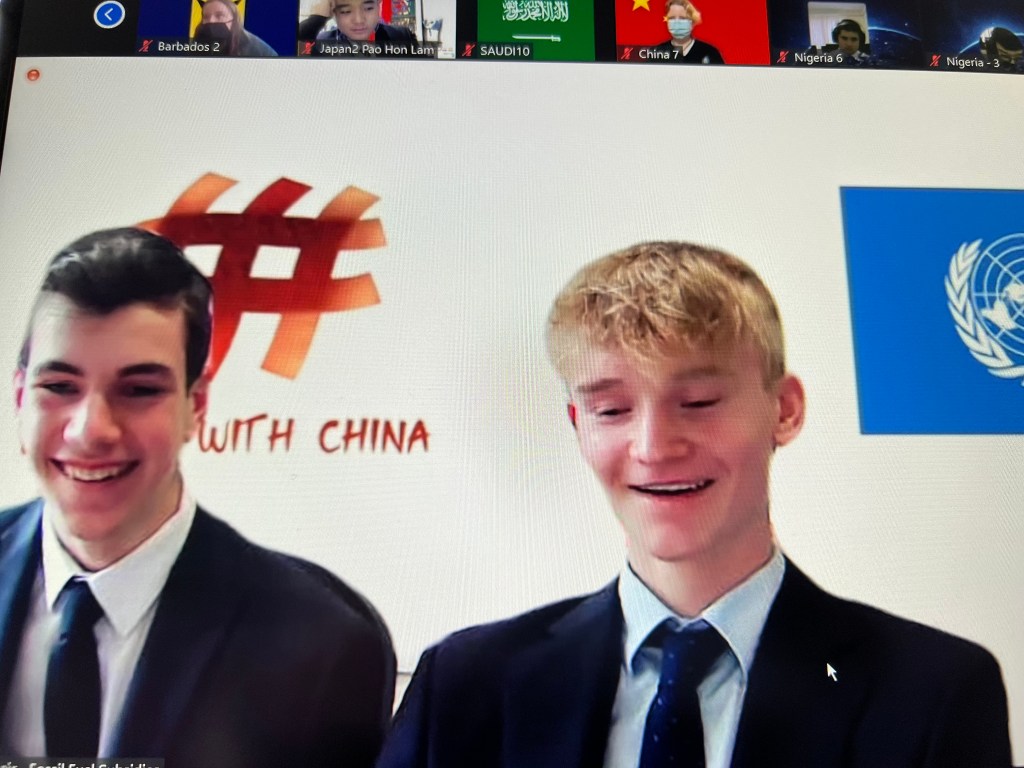
    Theo Innes, President of the Conference, and Remi Livesey, Vice President, delivered their responsibilities with energy and skill

    A representative from each school was initially asked to talk about climate change and how it affects their home country. A student from King’s School Worcester, spoke about the frequent flooding in the city and how that affects livelihoods and communities locally. A student from Marlborough College spoke of the need in the UK to increase statutes, sanctions and subsidies and to follow through on policies as a matter of urgency.

    Guest speakers included Neil Hirst, formerly from the International Energy Agency and representatives from the Foreign & Commonwealth Office and the Chinese Embassy in the UK. Students then spent two hours debating resolutions in three different breakout rooms from the perspective of their allocated country. Common to Model United Nations conferences, this encourages young people to debate from another perspective and builds global awareness. Topics for discussion and negotiation included phasing out fossil fuels, finance for vulnerable communities and carbon tax.
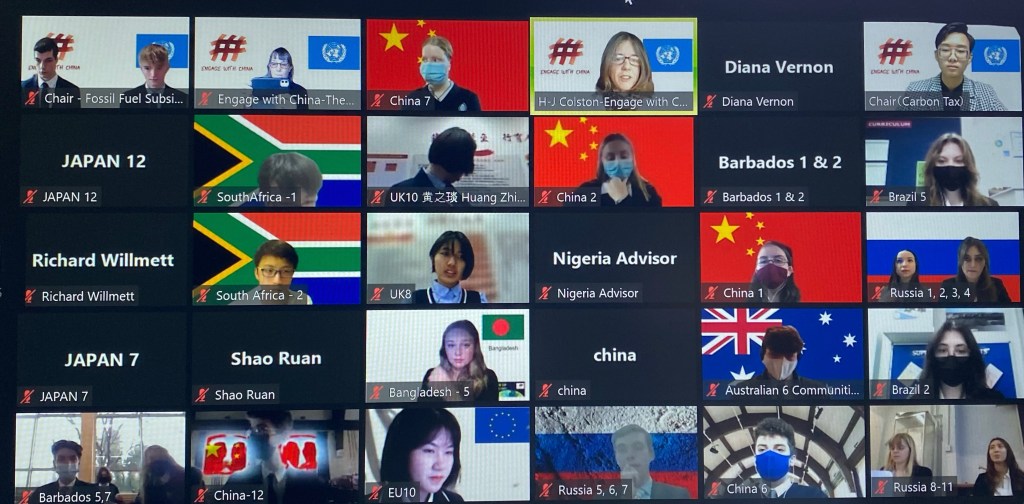
    “Students at this MUN embraced the urgency of climate change and spoke with real passion and persuasion,” said H-J Colston-Inge, Director of Engage with China. “What was really encouraging to observe, was the empathy, respect, and connection between the delegates. As our charity aims to build China literacy in schools, one of the outcomes was that western students were able to witness the high calibre of their peers from China. We were encouraged that one native English speaker is learning mandarin for GCSE and wished the Chinese students a happy new year in a pre-recorded speech. A greater global awareness is critical to enable cooperation between nations and to ensure that steps can be taken quickly to save the planet.”
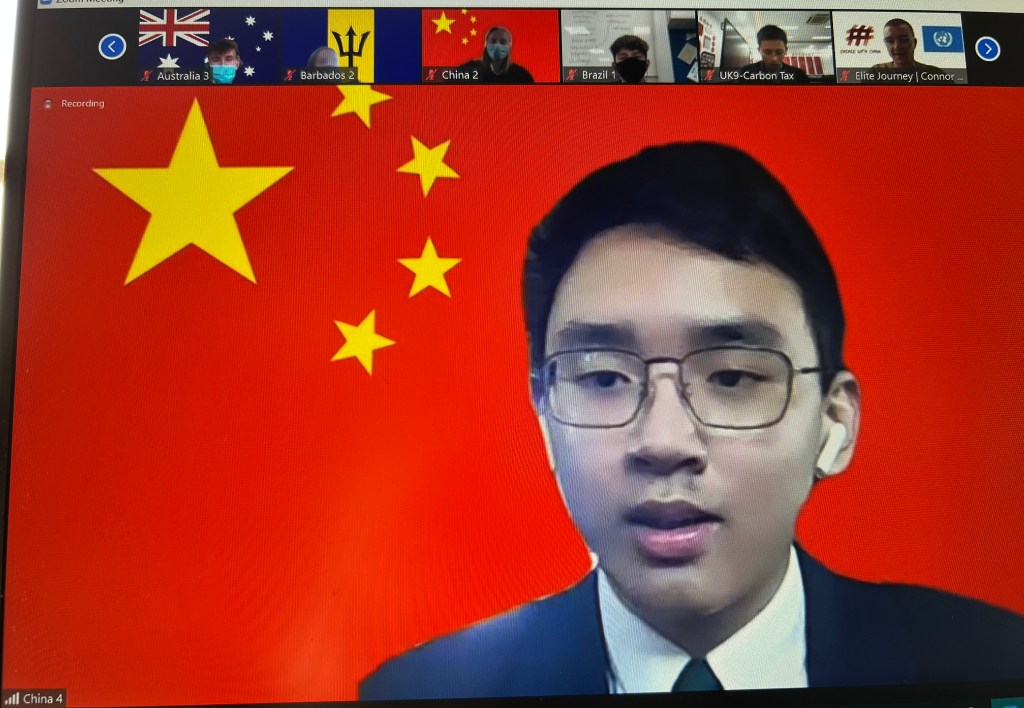
    China Delegate Number 4, studying in Dublin, spoke with eloquence and clarity

    Richard Higgins, Conference Director from the Grange School, said that “it was an amazing event,” and that his “students were buzzing at the end of it.” Changchun Foreign Language School, which fielded a Chairperson, Chen Silin, has already committed to participating in this Engage with China MUN in 2023.

    Another student from Shenzhen Foreign Language School expressed her delight at the learnings of the conference.

    It provided us with a wonderful platform. It showed us that the more engaged we are individually and the more engaged we are as nations, the better the future will be.

    Based on the overwhelming success of the Conference, this will become an annual event. Please contact Engage with China to register early interest to participate in the 2023 conference.
  • Y8 China Challenge Days result in invitation to return

    “Shenzhen is 13 times the size of Birmingham,” recounted one bright pupil at the end of Day Two of our China Challenge Days delivered into Walkwood Church of England Middle School this week. This is perfectly true – but many people probably haven’t even heard of Shenzhen. In the space of 40 years, Shenzhen, a previously sleepy, undeveloped coastal area in southern China with a population the equivalent of Redditch in Worcestershire, has fast become a burgeoning metropolis boasting the accolade of being China’s Silicon Valley and one of the busiest container ports in the world. It is just one of the many examples of China’s development unprecedented in history that is manifest in 100s of new cities across China that have taken shape as part of China’s economic development over the last few decades. Alongside this economic growth, fuelled by western consumption and the desire for cheap goods made in China, the ‘Middle Kingdom – the translation from the Chinese name for itself – is a renewed national self-confidence that harks as far back as the ancient Silk Roads when China was very much a superpower and other nations desired its silk, porcelain and tea. 

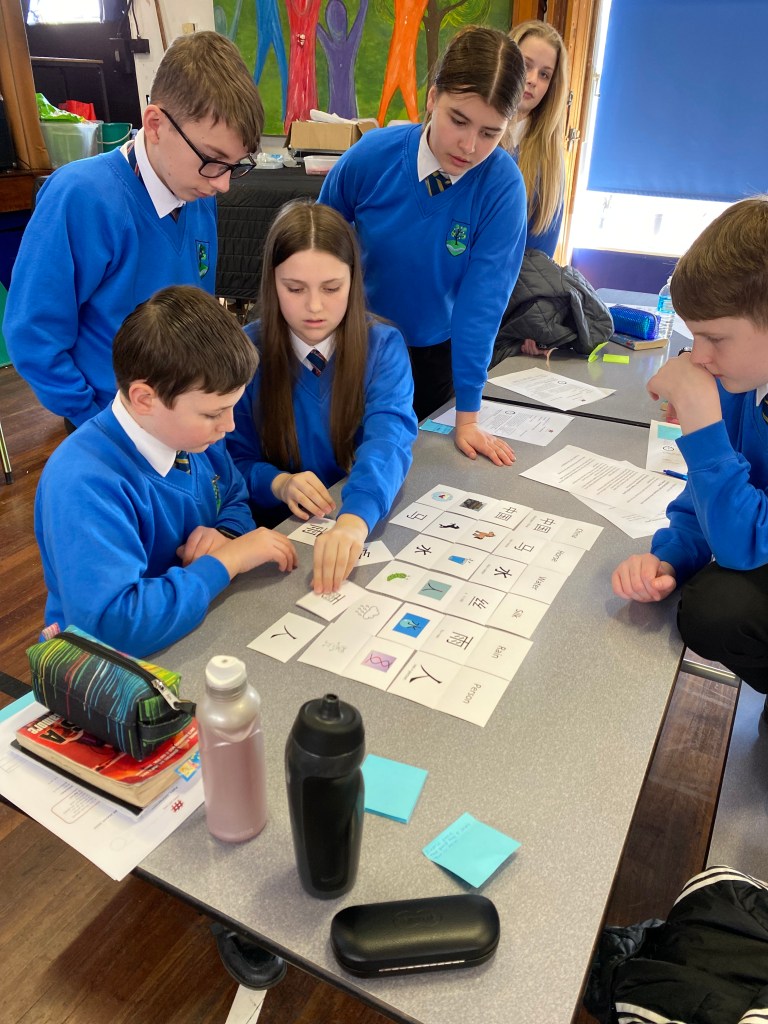
    Pupils learn about Chinese characters through language de-coder game

    Some 2.5 years ago a conversation with Principal, Reverend Clive Leach, and H-J Colston-Inge, Director of Engage with China, an educational charity that builds China literacy in schools, culminated in an agreement about the importance of building global awareness in school through the lens of China. An invitation to deliver a Challenge Day to Y8 ensued but unfortunately the pandemic delayed the visit until Monday this week. 

    “There’s a real buzz in school today,” said Dani Timmins, Assistant Principal. “…It is three years since we have been able to invite in any outside speakers into school and we are really excited to engage our pupils with our new curriculum which will look at China.” For H-J and her colleague, Theresa Booth, at Engage with China, it was an equal delight to be able to bring China alive in the classroom and it was music to our ears to hear Ms Timmins agree with us that, “China is a global force and it is really important that children recognise this… if we can inspire their curiosity, then they will learn more as well.” 

    Two half day sessions were delivered to 170 pupils. Activities and content were wide-ranging and included mandarin language, role play about the environment in China and its commitment to renewables, the rise and fall and rise of China as a superpower and population size through an activity involving 60kgs of rice! “To be able to do an activity like this which the school could not resource, was fantastic!” said Mrs Timmins.  

    H-J Colston-Inge said, “since we went to China in the 1980s, my colleague Theresa and I, have spent a lifetime building China literacy and opportunity between China and the UK from the boardroom to the classroom. As China continues to develop, its impact and influence on the world only continues to grow. It seems to us that we do young people a dis-service if we do not build competitive edge by opening eyes to the second largest economy in the world and it is always a delight when pupils say they want to go to China – as one did today – having been involved in one of our China Days.”

    On summarising the learnings, one pupil, Lucas, highlighted that “190 languages are spoken in China” and another correctly noted that one in four people is Chinese. H-J continued that, “it is so encouraging to hear pupil recall about the learnings and to know that they have been engaged. Working with a big group can be tricky but the pupils were a delight and a credit to the school. The warm welcome, which began on arrival at the school gates from the Head himself, coupled with the positive atmosphere which permeated the whole school, were testament to the fruits of faith ethos there and it was a privilege to work with these pupils.” Feedback from pupils and staff has been positive. One teacher, who helped to facilitate remarked on the “great resources and very knowledgeable tutors who were excellent in engaging pupils.” The best news came at the end of Day Two when Mrs Timmins said,

    I want to invite Engage with China back in next year to teach our Year 7s and make this a regular feature of our school curriculum!

    加油 as they say in China! Bring it on!

  • Model UN provides global climate change debating platform for future leaders

    The world was focussed last month on COP26 in Glasgow and the resolutions agreed by national leaders to tackle the complex challenges of climate change and to agree on scaling down the use of fossil fuels. Those decisions and ensuing action by individual countries will define the sustainability of the planet in the years and decades to come. UK educational charity, Engage with China, is providing a unique international experience during these pandemic times in the shape of a Model UN, entitled ‘Good Cop Bad Cop?’ Aimed at 16-18 year olds, this event will enable future leaders to engage with the climate change debate, build global outlook and develop the skills to influence change. 

    Up to 160 students from countries around the world including China, UK, Australia, Dominica and Malawi, will meet online just before Chinese New Year on 28 January 2022, to discuss and debate the major issues discussed at COP.Students will be allocated a country to represent other than their own and will negotiate from that perspective as well as develop debating, presentation and cross-cultural skills.  

    Director of Engage with China, H-J Colston-Inge, said, “Climate change affects us all. Our vision is to inspire a generation of China-literate young people who will have greater cultural competencies and insights to lead, negotiate and collaborate with China. When we think about climate change, though, this is a global challenge of huge magnitude. This event will create a meaningful opportunity for people:people dialogue for students from all around the world and to discuss what should be done to limit the damage.”

    The Grange School, Cheshire, takes up the honour of being the Host School for the event and, as with all MUN events, it will be student-led. Acting President, Theo Innes, who is an experienced debater, said, “I am extremely excited to be head of this conference, and am thoroughly looking forward to all of the incredible debating I know shall take place. I am especially interested in this conference as I have always been interested in the climate and how we can preserve it in a way that is beneficial to all.”

    In the schools’ MUN scene, a geographical divide exists with southern and northern schools tending to debate together. “We are delighted to be hosting this conference alongside Engage with China,” says Richard Higgins, Host School Spokesperson. “I run the Model United Nation’s society at The Grange School and enjoy taking students to MUN conferences around the North West of England. This event will be different as Engage with China brings together a rare opportunity for school teams across the country to meet as well as adding a valuable international dimension.”

    Schools from the UK taking part include King’s School Worcester, Lancing College, Ashville, Kingswood, Bath and Marlborough College. Chinese schools participating include a school from Changchun in northeast China, as well as two from as far south as the tropical island of Hainan and Hong Kong.

    Applications to participate in the event have been very popular. Registrations close on 10 December.

  • Educational pioneers in creating a “strategic resource for Global Britain”

    “Governments can have policies,” says British Ambassador to China, Dame Caroline Wilson, “but it is ultimately people who deliver and implement those policies.” Speaking at a recent online forum for young adults who have spent time in China on the Generation UK programme, the Ambassador continued that it is vital, therefore, to have a range of people with different skills who are “informed about China and are therefore more equipped to enable the people-to-people dialogue, interaction and trust that are key to developing a positive bi-lateral relationship. Such people,” Dame Caroline continued, “are a strategic resource for Global Britain.”

    Engage with China (EwC) is an educational charity building China literacy in primary and secondary schools. Enriching the curriculum through fresh knowledge about China, pupils make connections across a wide range of curriculum subjects and engage with the country that is likely to have a larger impact on their future than any other.

    Pupils are encouraged to look at different values and systems, to interrogate and challenge perceptions and think about their identity in a changing world.  Whether one likes China or not, our belief is that we need to engage with what China is like, how come it is like it is and what that means for the world. Through our ‘China Challenge Days’ we open young eyes to what is happening there; we feel that China has to be an important part of a wider education about what the world is like and how it has changed since globalisation, how we are inter-connected in so many ways through trade, history, logistics, tech, AI, social media, not least through the very planet we inhabit.

    H-J Colston-Inge, Director, Engage with China

    The bi-lateral relationship may be wounded at the moment “but demonising China does not lead to solutions,” Dame Caroline added. “The world is full of opportunities, no more so than in China.” This sort of news headline is seldom on the front pages of the media and yet it is those positive stories that could well inspire creativity in the young generation today that in turn could boost the economy and develop trade and entrepreneurship in the future.

    Zhou Qunfei, Founder, Lens Technology, whose factories produce over one billion glass screens for electronic hand-held devices every year

    One visionary headteacher from the outstanding Trinity St Peter’s school in Liverpool, Deborah Pringle, was excited about what EwC could offer her pupils and enabled them to take part in an early pilot project. She applauded “the way [EwC] showcases some of China’s entrepreneurs and those human stories of rags to riches.” She continued, “Our school community lives in an area of financial as well as aspirational poverty. When you talked about Zhou Qunfei, subsistence farmer-turned-billionaire, supplying glass to multinational smartphone companies like Apple and Samsung … those are the kinds of messages young people need to hear…That they can leverage their experiences; that their life narrative can change and that opportunity is all around us.”

    Theresa Booth, Director of Engage with China, says, “We have created a pioneering pathway in schools to develop a generational resource for Global Britain, teaching pupils about China – and we are proud of that achievement. There are certain cultural reference points that youngsters need to know – and if they do not know much about China then this significantly impacts on their cultural literacy and understanding of the world today.” She continued, “We are excited to be back in the classroom from September working with young people again face to face. Importantly, it is good that more and more schools are expressing an interest to work with us…” 

  • Everyone is thinking China, China, China…

    WHO, Covid, space exploration, AI, company listings, big data, environment, world resources, human rights – all of these subjects fill media headlines – so it is no surprise that, “everyone is thinking China, China, China.” As the world’s second largest economy, largely fuelled by globalisation and a decades-long national vision to lift itself out of poverty, China is now firmly intertwined with other nations through logistics and supply chains and boasts the largest population in the world. Add a new-found self-confidence and its actions are bound to have huge global impact and no wonder everyone has China on their minds.

    Dame Caroline Wilson, British Ambassador to China, spoke today to the Generation UK: China Network about the importance of building a ‘China-literate’ generation. Elaborating on what this phrase means, she said, “China literacy is not just about history but rather understanding the dynamics of sectors and the interdependencies that we share…it is also about nuance, nous and networks.” She added that demonising China is not helping for finding solutions to global problems.

    Engage with China, (EwC) an educational charity building China literacy in schools, has been aiming to build all these since 2018. Founded by two British women who have long experience of engagement with China, EwC’s vision aligns with Dame Caroline’s, enabling young people to build trust and be involved in informed dialogue having discovered what China is like for themselves. Theresa Booth, a former corporate lawyer, took the entrepreneurial route and set up a sandwich deli in Beijing in the mid 1990s. H-J Colston-Inge, studied mandarin at Durham University and worked for Chubb as the only ‘foreigner’ in their network of offices in mainland China. Together they also run the Chopsticks Club, an innovative China-UK professionals’ network, founded in 1993.

    “If Global Britain needs a China-literate generation to promote its interests, then starting young is really important,” says Director, H-J. “China has so much to interest young people – from its mythological dragons to food, AI, inventions, values and language – that we can see how easy it is to capture the imagination from a very young age. Our learning resources are designed for primary and secondary school pupils.”

    Fostering a global outlook and an understanding of China through age-appropriate, curriculum enrichment ‘Challenge Days,’ EwC enables young people to recognise that China plays a large part in their lives linked to us through history, the things we buy and where they come from, and also to consider the way they interact with the world, for example through TikTok, the massive social media phenomenon utilised by young people that is Chinese-owned. Schools value how EwC brings an international experience into the classroom, that pupils are encouraged to form their own opinions and to see that cross-cultural collaboration is the best way that humanity can hope to solve sustainability goals necessitated by climate change. 

    A key learning for pupils is also to understand ‘the how’ of China’s growth and economic transformation and to consider its growing influence and impact. Through activities and learning, pupils discover that China’s unprecedented rise is largely due to its system of government and its vision for itself. Director, H-J continued, “We want young people not only to be ‘thinking China, China, China’ but what does China mean for their future?”

    Generation UK is a British Council campaign that has enabled 67,000 young people aged 18+ to study, travel or intern in China since 2016. 

  • Durham student internships reap China-UK educational benefits

    Two Durham University students have just completed a 10-week internship programme with Engage with China, an independent educational charity, thanks to a philanthropic gift from an alumnus in Chinese Studies also from Durham.

    Olivia Farr, currently in her 3rd year studying Chinese, should have been in China for her year abroad and Riley Lin, a postgraduate student studying marketing at the Business School, is from Xiamen in Eastern China. For obvious Covid reasons, this academic year for both of them has been contrary to expectations; for Riley this meant that she had only online lessons and Olivia has been based at home and never made it to China for her year abroad.

    However, an opportunity to become interns with Engage with China, an independent educational charity building China literacy in schools, was exciting for two successful candidates. The roles included social media development, research and event planning and enabled the students to develop new skills and work experience in these most unusual times. Asked why she wanted to work for the charity and how it benefited her, Ms Farr said; 

    Engage with China is filling a crucial gap in the curriculum and helping children to reach bright futures that will undoubtedly be impacted by their understanding of Chinese language and culture. It is about time the UK education system caught up and helped children to develop their global outlook, as such Engage with China is stepping up. During my internship with Engage with China I was given the opportunity to gain new skills and communicate in ways that were not previously available to me. It has given me the confidence to experiment with new social media platforms and converse with people in multiple languages in a business setting, whilst allowing me to constantly expand my knowledge.

    Olivia Farr, Undergraduate in Chinese Studies
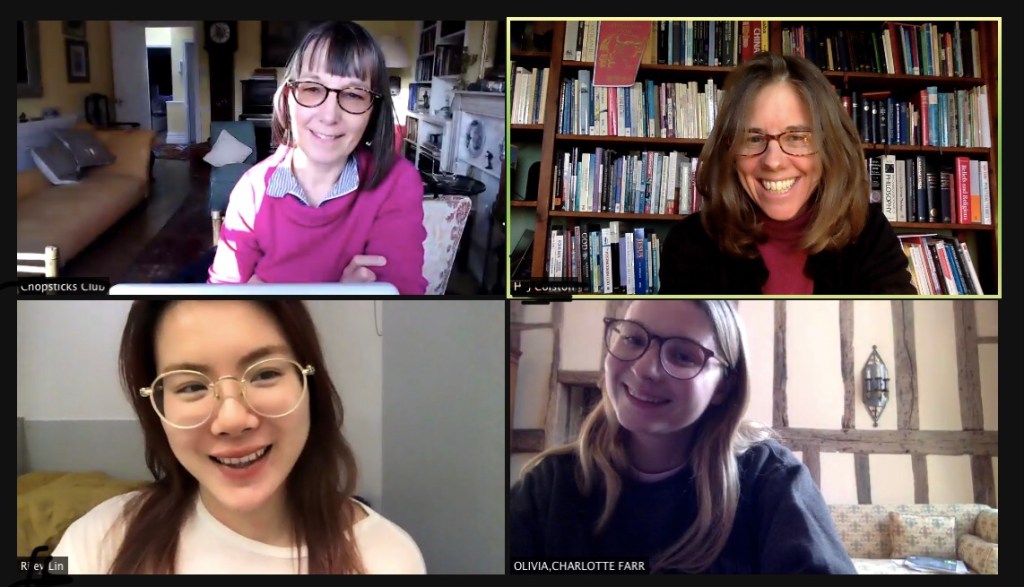
    Weekly team meetings were held via Zoom

    Speaking about the work of the charity, Director Ms H-J Colston said, 

    “Through our curriculum enrichment programmes and resources we aim to add breadth to the curriculum, to challenge perspectives and to open eyes to modern China, its development and its impact. We are a small charity and having two bright students working with us who have an interest in and knowledge of China, has boosted our output exponentially. Thanks to the vision of a generous donor who, like us, believes in nurturing opportunities for young people with mandarin and China-related skills, we were able to provide an opportunity to work cross-culturally and to converse in both mandarin and English to develop their language skills, too. Despite having to work remotely and to meet only online, we are so grateful to the students for their ideas and what they have achieved in a short space of time.”

    This internship gave me a better understanding of how foreign media (e.g. Facebook, Twitter and Instagram) is run. The internship also allowed me to practice speaking English,” said Ms Lin. “The team is very friendly and empowers the interns to express ideas and thoughts, making it a great internship experience.

    Riley Lin, postgraduate student

    Engage with China is currently looking for volunteers with teaching experience to help with developing more resources as it enters the next phase of growth. Please contact us if interested.

  • EwC fills a curriculum knowledge gap

    Engage with China delivers curriculum enrichment programmes to build China literacy, global outlook and critical thinking skills in schools. EwC Director, ‘H-J’ Colston, remembers that two pages of her history A-level book, which referenced the Opium Wars in the 19th century, were the only reference to China of her whole school academic life. It appears that not much has changed in several decades with no more emphasis being placed on China knowledge despite the fact that the world has changed and that, through globalisation, China has been one of the main winners.

    In this video, intellectually curious student, Freya, talks about her drive to understand more about China and her belief that China will have much more of an impact on her life than the US.

    I knew China was a communist country, which intrigued me, but it always felt very foreign… my education didn’t teach me a lot about China

    Freya, aged 16, former pupil at Hayesfield School

    EwC is an independent educational charity delivering off-timetable curriculum enrichment programmes – or Challenge Days – in primary and secondary schools. The programmes are ideal to benefit a whole year cohort and not just learners of mandarin, for example, as content and activities are age and key-stage appropriate and cover themes such as innovation, Silk Roads, climate change, society, geography and history.

    In light of the pandemic and the restriction on field trips and excursions, EwC Challenge Days are an excellent way to experience something of China. Knowledge is power and discovering insights into the world’s second largest economy is so relevant today. Pupils really engage with learning about China’s modern context and culture and are encouraged to think more globally.

    Theresa Booth, Director – Engage with China

    This video also includes pupils from Pangbourne College. They capture the fun of language learning from scratch by showing off their new-found mandarin skills as well as recall some of their learnings from the Challenge Day.

    EwC has delivered programmes to thousands of primary and secondary school pupils across the UK in both the independent and state sectors. To find out more and to invite us to up-skill your pupils, please contact us today via https://engagewithchina.org/contact/

  • Sir Vince Cable supports China- related education

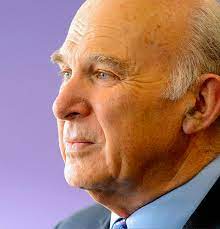
    Rt Hon Sir Vince Cable, Patron, EwC

    Engage with China confirms the appointment of The Rt. Hon. Sir Vince Cable, former Leader of the Liberal Democrats and Minister of State for Business, Innovation & Skills, as a patron of the independent educational charity.

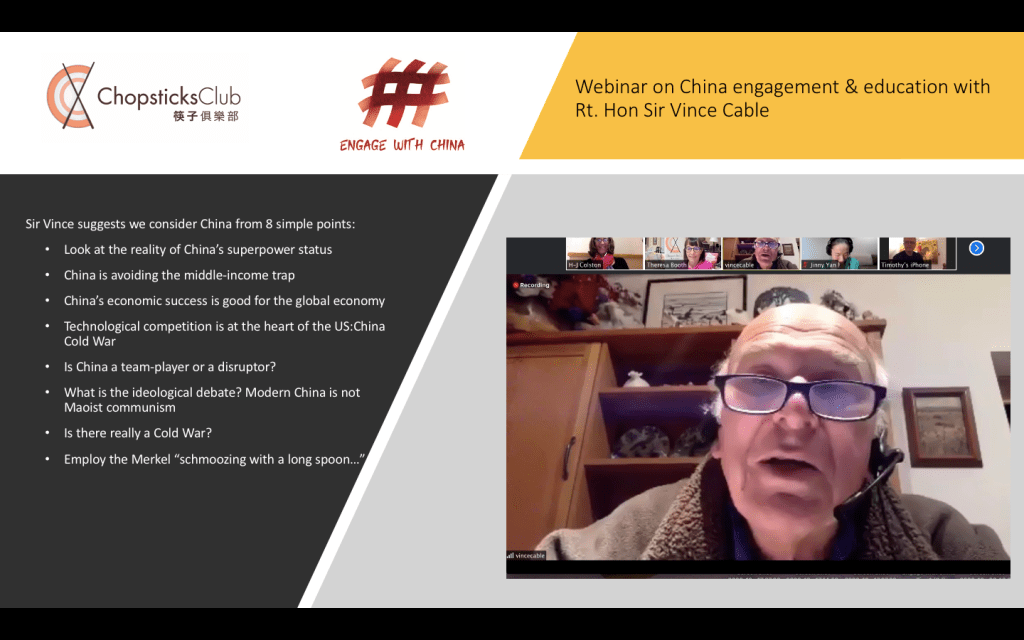
    “Now that China has become an economic and technological superpower some are reacting with fear or hostility. It is better to engage. Large numbers of students, visitors and businesses already do – in both directions. That was the approach I adopted as a government minister in my dealings with China and I want it to continue,” said Sir Vince 

    Echoing his comments, Director H-J Colston said, “We are delighted that Sir Vince has accepted our invitation to be one of our patrons. His views chime with our belief that it is crucial to generate curiosity about and dialogue with China rather than to retreat or ignore. China is rich with ideas and subject matter that will benefit young minds and develop character skills relevant to our times.”

    Sir Vince’s book, ‘China Engage – avoiding the new Cold War,’ (published 2019) is “precise, forensic and clear as he brings to the debate about China realism and facts.” It invites readers to consider whether the deterioration of China-western relations is a crucial issue for the future or simply a passing phase, caused by Coronavirus and leadership personalities. 

    Sir Vince was a key speaker at a successful webinar run by Engage with China and its partner organisation, Chopsticks Club. Themes included looking at the importance of increased access to China knowledge in education based on geo-political and economic developments.

    Sir Vince joins Sir Anthony Seldon, educator and former Vice-Chancellor of Buckingham University and Head of Wellington College, as patron.

  • #Backtoschool – what China did

    It is some months ago now since Chinese schools reopened. Rather than a blanket, country-wide easing of lockdown, however, re-opening began with a deliberate focus on cities and areas that were classified as ‘low risk.’ In such cases, all age groups were able to go back to school, from kindergarten to senior school. Full virus testing operations were put in place including temperature checks and health passports. As one Mum told us,

    “it is the mandatory travel reporting and temperature testing entering every building that have kept a stranglehold on the virus”

    and enabled 1.4 billion people the chance to return to life pretty much as normal.

    During the online homeschooling phase, which varied from place to place but lasted in the southern city of Guangzhou, for example, from end January 2020 to 01 June, pupils had to wear school uniform and sing the national anthem every day, even at home. The school timetable remained as full-on as ever with regular academic testing. We interviewed one family whose 14 year old daughter was still doing PE following a video made by her teacher, cooking as part of her homework and also learning about the coronavirus.

    Despite an extended period of home schooling, a relatively normal life outside school resumed with restaurants and shopping malls open. The public was simply required to have a temperature check when entering a building and wear a mask for the protection of others.

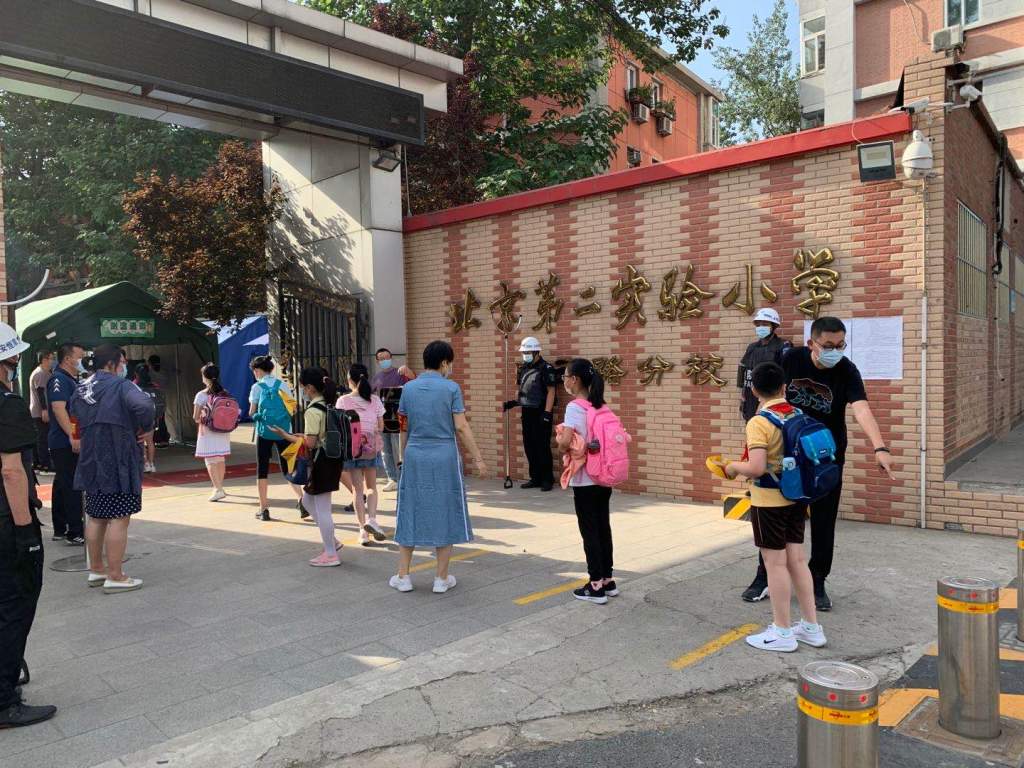
    Of course students and parents have, like us here in the UK, experienced delayed exams, class closures and online learning. When schools were reopened, kindergarten and older children were dropped off at the school gates and parents were no longer allowed to accompany children inside. Staggered start and end times as well as social distancing helped to reduce additional risk.

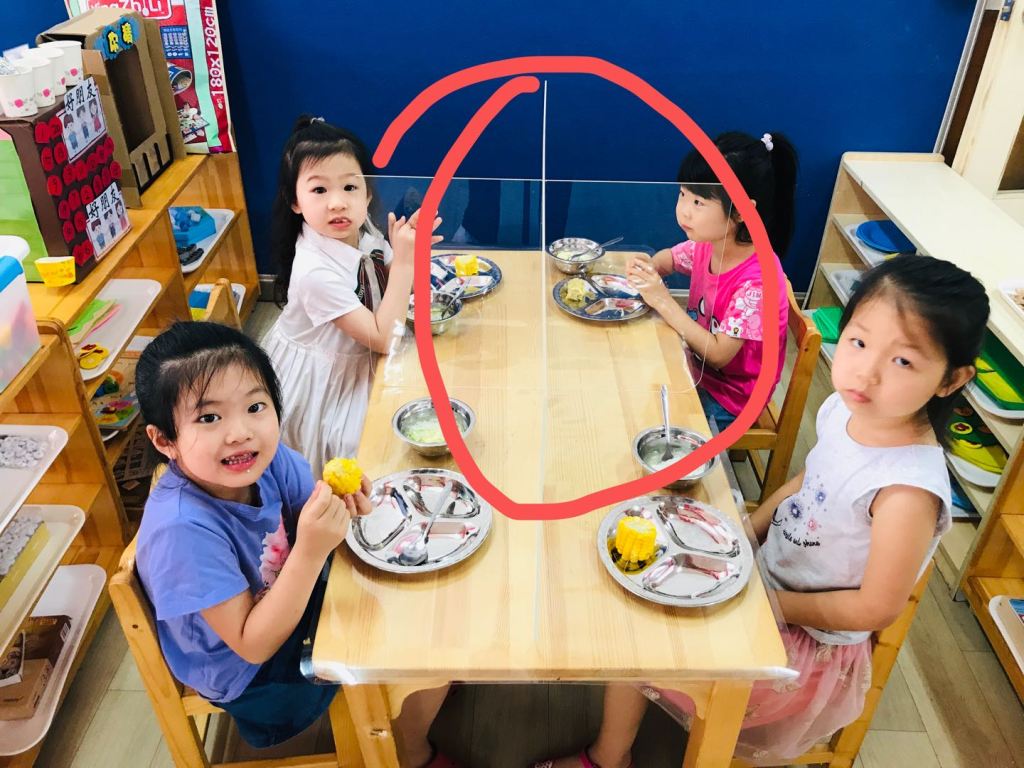
    Initially when kindergartens reopened, children had to eat alone but subsequently glass or perspex separator boards were placed on the tables between children. In boarding schools, beds were added and separated 2 metres apart, to enable social distancing during the daily, designated nap time – (yup! that even includes senior school students) – and mixed class activities were reduced.

    The overwhelming feeling of being back at school is the happiness of being together amongst friends. It is what our education specialists and SLTs will also say. To be able to “hang out and chat with my friends, to laugh together and to do sport,” said Jia Lu, aged 14, are the things that, like for most children everywhere, enhance the joy of the shared learning experience and improve wellbeing.

    Whilst outbreaks of the Coronavirus still occur, as happened in Chengdu City in China’s western interior, just before Chinese New Year, China continues to manage the virus well. Whenever it raises its ugly head, strict lockdown measures are enforced and travel bans implemented to prevent its spread. Adherence to the rules has meant that Chinese people are enjoying ‘a life more normal’ than we are able to experience just yet. We would certainly like a bit more of that!

  • Every area of human endeavour will be impacted by China

    Every area of human endeavour will be impacted by China

    China’s size in terms of its geography, economy & population, means that its impact will be felt in significant ways around the world. Like its politics or not, therefore, people of all nations will come into contact with its tech, social media apps, investments, trade, e-commerce, values, influence and reach.

    We caught up with our charity’s Political Ambassador, Dr Kerry Brown, a leading academic on China, and Professor of Chinese studies at the Lau China Institute, King’s College London. Dr Brown says,

    In the 1970s the Chinese realised that their knowledge levels of the outside world were poor. Consequently, they invested vast amounts of time and effort in going to look at that world and learn from it. In 2021, Europeans – and Americans in particular – need to adopt a similar mindset, and see China not as an object of criticism and a place which is a repository of difference,  but somewhere where we can truly learn from.

    Despite its economic progress in recent years, that it is home to more billionaires than anywhere else in the world and is the initiator of the Belt & Road initiative – heralded as an economic driver for the world for a generation – China is little understood in the west. Brits who can speak decent Mandarin Chinese could be counted only in a few thousand.

    This year the Coronavirus was called by President Donald Trump, “the China virus.” That single nomenclature added to the commonly held negative feelings about the world’s second largest economy.

    In Dr Brown’s short video, however, he suggests that we would do well to take a closer look at what China is, what it means, what we can learn from it, “not least because it represents one fifth of humanity and therefore a large part of humanity and its society.” In 2020, this year in which Britain leaves the European Union and seeks to find fresh ways to achieve its global goals, it would do well to consider what China has to offer other than cheap goods and labour. Indeed, for our nation’s young people, China and its opportunities should be taken into consideration when looking at future careers.

    Dr Brown is a regular speaker, author of countless books, papers and articles on China. We are proud to have him as one of our stellar ambassadors who can share real insights into what China is now and support us in our work to build China literacy in schools.

    Let us know what you think.